Arrival of European companies in India
Firstly, we will see the Situations of Europe in which we will study how European companies reached Asia and India.
Situations of Europe
Roman Empire was expanded into three continents
In 395 AD Roman Empire got divided into Eastern Roman Empire (Constantinople as Capital) and Western Roman Empire (Rome as Capital).
7th century saw the rise of Islam religion with the help of political power. It attacked Eastern Roman. In 1453 AD, they defeated Constantinople by Sulatn Mahmed of Turkey.
After this the regions of Eastern Roman Empires came under the control of Ottoman Empire which was also known as Byzantine Empire.
Ottomans also controlled the major trade routes between Europe and Asia.
Establishment of Ottoman Empire was not just political, but it was also culturally so, the people of Eastern Roman Empire started moving towards Western Roman Empire specifically Italy.
Cardinal Bessarian kept around 800 manuscripts with him and moved towards Italy.
The Literature of Eastern Roman Empire led the emergence of Ideological Revolution in Italy because Italy was the place of Scholars and Liberal Society.
Ideological Revolution is known as Renaissance which means re-awakening.
Renaissance -------- Individual became Center ---------- Logical Thinking ---------- Proof (Anything which can be proved is acceptable otherwise not acceptable) ----------- Innovations/Research ----------- Machinery use: - (a) Agriculture ------ Surplus production -------- search of Markets (b) Manufacturing Units ------------ high production: - (i) need raw materials (ii) markets. This finally lead in search of new places and new routes.
Vasco da Gama, the Portuguese explorer, set out in 1497 to find a sea route to India, following the path pioneered by Bartolomeu Dias around the Cape of Good Hope. While da Gama navigated the Atlantic and rounded Africa, he relied on local expertise to traverse the Indian Ocean. At Malindi, on the East African coast, he took aboard Kanji Malam, a Kutchi sailor renowned for his knowledge of the sea route to India. Kanji Malam’s guidance was crucial in navigating the monsoon winds and ocean currents, enabling da Gama to reach Calicut (Kozhikode) on the southwestern coast of India on May 20, 1498.While some historical accounts suggest other figures, such as the Arab navigator Abdul Majid, may have assisted, scholars largely agree that Kanji Malam was the navigator who directly guided da Gama across the Indian Ocean. This collaboration highlights the importance of local maritime knowledge in the success of European exploration. Without Kanji Malam’s expertise, da Gama’s voyage might have faced greater difficulties, as the journey involved complex navigation through unfamiliar waters, unpredictable winds, and the threat of scurvy and other hardships. In summary, Kanji Malam played a pivotal role in helping Vasco da Gama reach India, demonstrating the critical contribution of indigenous navigators to the Age of Exploration.
European Powers: -
European powers came into existence in search for new places to settle colonies.
(1) Spain (Columbus in 1492 founded America)
(2) Portugal (Vasco da Gama in 1498 reached India)
(3) France
(4) Britain
(5) Dutch
(6) Dane
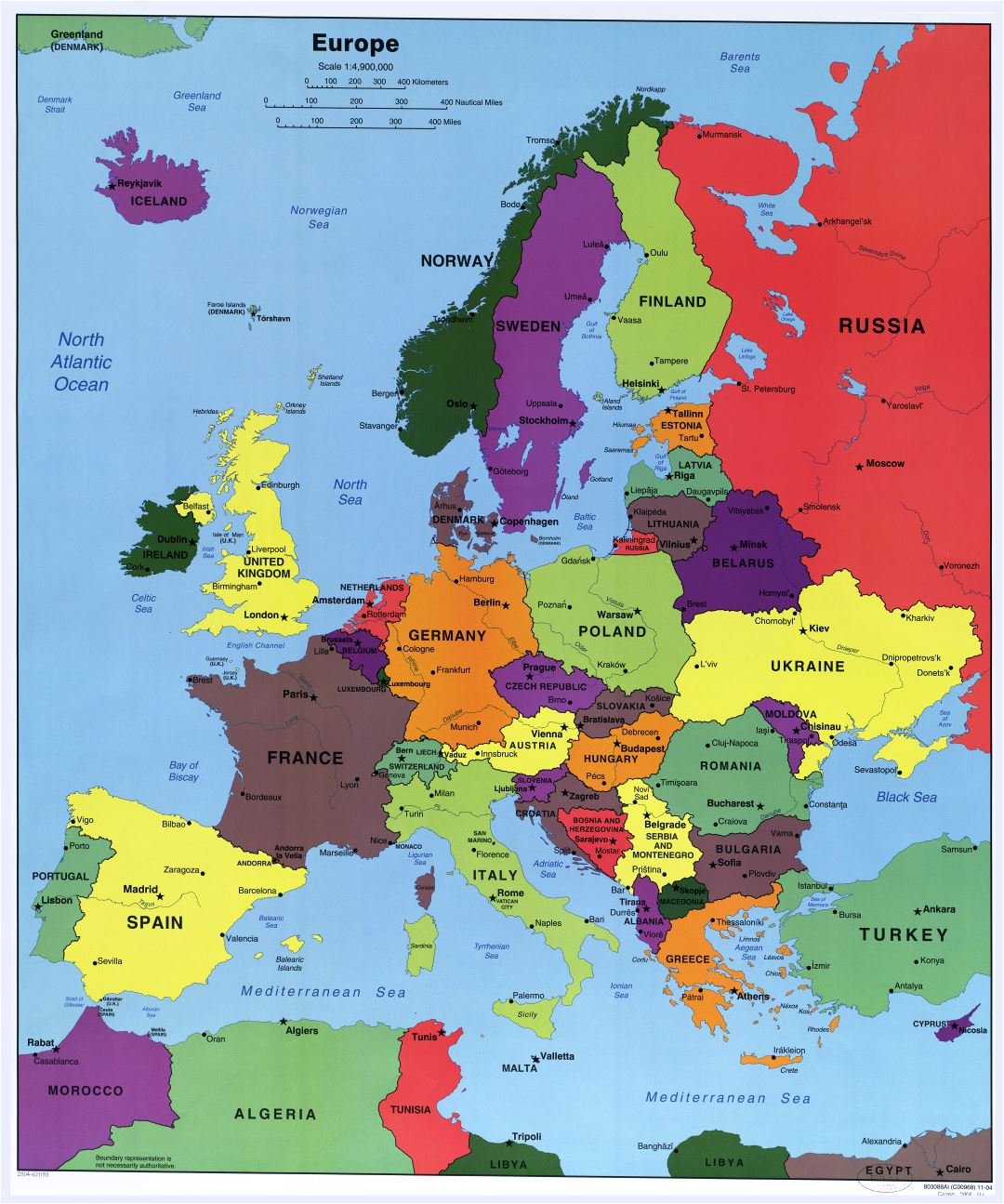
Marco Polo was one of the most important European travelers of the medieval world. Born in Venice around 1254 CE, he journeyed across Asia along the Silk Road between 1271 and 1295 CE. His travels opened a new window for Europe to understand Asia, especially the Mongol Empire, China, India and Southeast Asia. At a time when Asia was largely unknown to Europeans, Marco Polo provided detailed descriptions of geography, administration, economy, culture and customs. His experiences were recorded in The Travels of Marco Polo, which became a landmark work in world history.
Factors which motivated Europeans to travel/explore in India: -
(1) Visit of Vasco da Gama and his huge profit [60 times of cost]
(2) Tales of Marco Polo from Venice (Venetian explorer)
(a) Geographical Variations
(b) Vegetation Diversity
(c) Cultural Diversity
(d) Economy
Arrival of European Companies in India
Companies and Year of Establishment
(1) Portuguese - 1498
(2) British East India Company (BEIC) - 1600
(3) Dutch - 1602
* Government of Netherland started forming a group - 1595
(4) Danish - 1616
(5) French - 1664
* According to their factory's establishment in India, the sequence is: -
Portuguese - Dutch - BEIC - Danish - French
Factory: - means storage house and office for maintaining the records. It was not a manufacturing unit.
Fort: - means to create a wall to fortify and becomes a territory of Associated Government. They created residential houses, military units and coins production unit. It was challenge to sovereignty of Indian Rulers.
Portuguese Company: -
First Visit:-
- Vasco-da-Gama in 1498
- He reached Calicut [Malabar Coast]
- He was welcomed by King Zamorin (actual name was Samoothiri means God of the River)
- He returned back with Indian spices specifically Black Pepper. By selling of the spice, he gained a profit of 60 times of his total cost
- Vasco-da-Gama once again visited India in 1502.
- He established a factory in Cannanore
- In 1524, he revisits India as a Governor and the same year he died in India. He was buried in (Cochin) India itself.
Portugal Factories: -
There were three small states in the region of Kerela (Calicut, Cochin & Travancore)
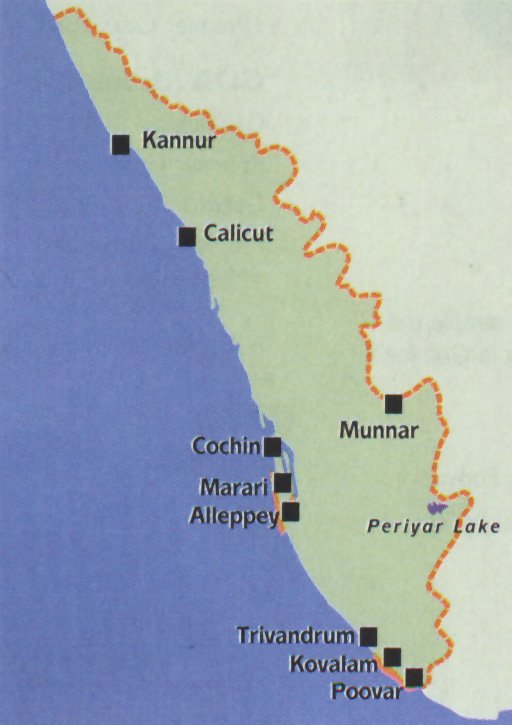
- In 1500, first trade center was established in Calicut, by Pedro Alvares Cabral.
- Later this center was destroyed by King Zamorin.
- Calicut and Cochin were rivals at that time.
- In 1501 ---- Cochin [First Capital]
- In 1502 ---- Cannanore
- In 1503 ---- Cochin [First Fort]
- In 1505 ---- Cannanore [Second Fort]
- In 1509 ---- Diu [Trade Center]
- In 1510 ---- Goa [Captured]
- In 1530 ---- Goa [Second Capital]
- In 1534 ---- Bassein
- In 1537 ---- Diu [completely captured]
Portuguese Governors: -
Objectivbes :-
(1) Trade
(2) Culturization (a) Christianity (b) Intermarriages
(3) Colonization
So Portugal government started appointing Governor for India
(1) Fancisco de Almida [1505 - 1509]
- He was the first Governor.
- He is known for Cartaze Suystem
- Also known as Blue Water Policy ( License Policy)
* Every trader or ship had to take permission from the Portuguese otherwise their ships or boats were used to sink in the water.
* Within 15 years, Portuguese destroyed the dominance of Arab Traders from Arabian Sea and Indian Ocean.
(2) Alfanso de Albuquerque [ 1509 - 1515]
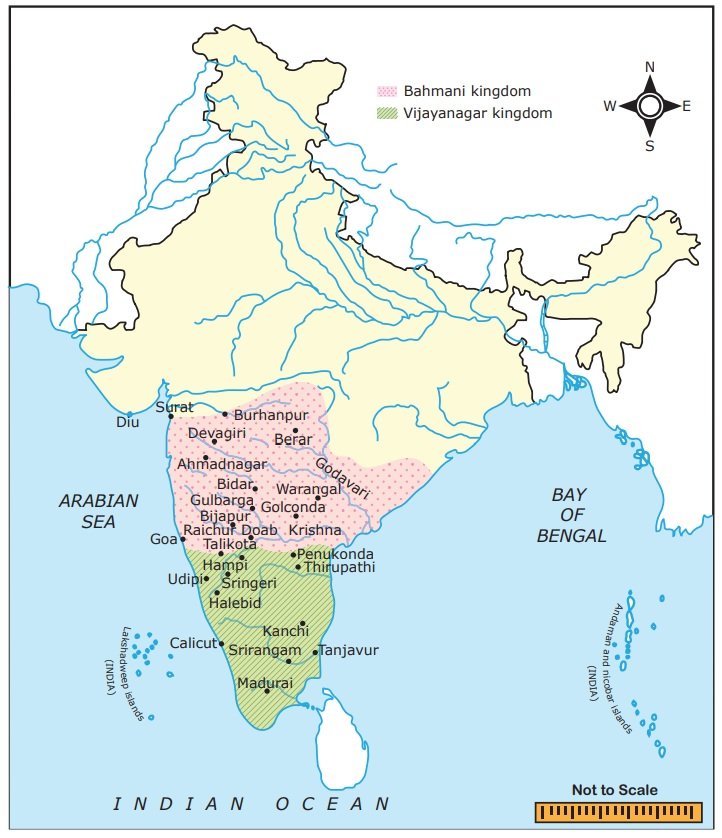
- He maintained friendly relations with The Vijayanagar Ruler Krishnadev Raya, who helped him in capturing Goa from Bijapur [Adilshahi Dynasty]
- Bahamani and Vijayanagar were rivalries.
- He is known as the real founder of Portuguese dominance.
(3) Nuna de Cunha / Nino [1529 - 1538]
- He shifted the Capital from Cochin to Goa in 1530
- He captured Bassein in 1534 from Ruler of Gujarat (Bahadur Shah)
- He captured Diu completely after death of Bahadur Shah in 1537 AD
* Bahadur Shah was the first Indian Ruler was captured and killed by a European Company (Portuguese)
Contribution of Portuguese in India
(1) Economy
(a) Agriculture
- Portuguese introduced various crops in India such as Tobacco, Citrus fruits, Maize, Tomato, Potato
(b) Trade [Europe and India]
Indian goods were sold to Europe and European currency came to India. It was one-sided trade.
(2) Cultural Contribution
- Introduced Architectural styles
- Built first church in Cochin
- Construction materials were used like Lime Mortar
(3) Technology
- ship buildings and printing press
(2) Dutch
- It was a kind of Semi-governmental company
- It had the right to take decision for War
- Right to declare war
- Right to conclude Treaty
- Right to annex territories
- right to trade
* These rights were given for Colonial Establishment
- Dutch company destroyed the dominance of Portuguese from India and Indian Ocean
- They have powerful military system and ships (fluet ships)
- Portuguese ships were bulky and large whereas Dutch ships were lighter with sharp edges (aerodynamic) as a result Dutch ships were faster in comparison to Portuguese ships
- Because Dutch ships were lighter, they can carry more goods in comparison to Portuguese ships
- Dutch earned a lot of profit through trade and destroyed the dominance of Portuguese
Dutch Factories in India
- First factory in 1605 ----- Masulipatnam (Eastern Coast)
- ----- Nagpatnam (Eastern Coast)
- ----- Vizagpatnam (Eastern Coast)
- ----- Cochin
- ----- Surat (Gujarat)
- ----- Cambay (Gujarat)
- ----- Bharuch (Gujarat)
- ----- Agra (U.P)
- ----- Patna (Bihar) (1632) (Patna College)
- ----- Chinsura (W.B)
* Dutch established their trade center and headquarter in Pulicat (Chennai) in 1610
(3) Danish Factories in India (1616) :-
- The Danish company established their first factory or trade center in Tranquibar (TN) in 1620
- Serampore (West Bengal)
- Balasore (Odisha)
- Similar to this they also had trade points in Surat and Patna
(4) British East India Company [Britain]
- It was a Private Company
- There were groups of 24 Directors, (Court of Directors) and they were responsible for organization and decision making. These Directors were shareholders to the Company and were the Owners
- Motive: - More and more profits
- This Company received charter on December 31, 1600
- Charter means Permission Letter to go outside and do trade. They had certain limitations.
- Indonesian Island had a great demand for textiles. BEIC took textiles from Masulipatnam (India) and sold it in Indonesian Island and then purchased spices from them and supplied the spices in European markets
- From 1600 to 1611, the BEIC was focussing towards the trade with South-East Asia specifically Indonesian Island. Ther major trade commodity was spices.
- From 1608, they were trying to get permission from Mughal Emperors to trade in India (Surat and Masulipatnam)
- Two British Ambassadors came to India in the period of Jahangir - William Hawkings (English Khan) (1608 - 1611) and Thomas Roe (1615 - 1619)
- The BEIC did not get permission to trade from Surat, so they established first trade center temporary in Masulipatnam in 1611.
William Hawkings (1608 - 1611)
- He reached Surat in 1608
- He was captured by Portuguese, but somehow, he released himself and reached Agra in 1609.
- He impressed Jahangir with Turkish language and Jahangir gave him a title of English Khan.
- Hawkings was married with a daughter of Mughal Court Nobel.
- Initially Jahangir permitted to trade in Surat but due to the influence of Portuguese it could not happen.
- He left Agra in 1611and died in the way in 1613
British Factories
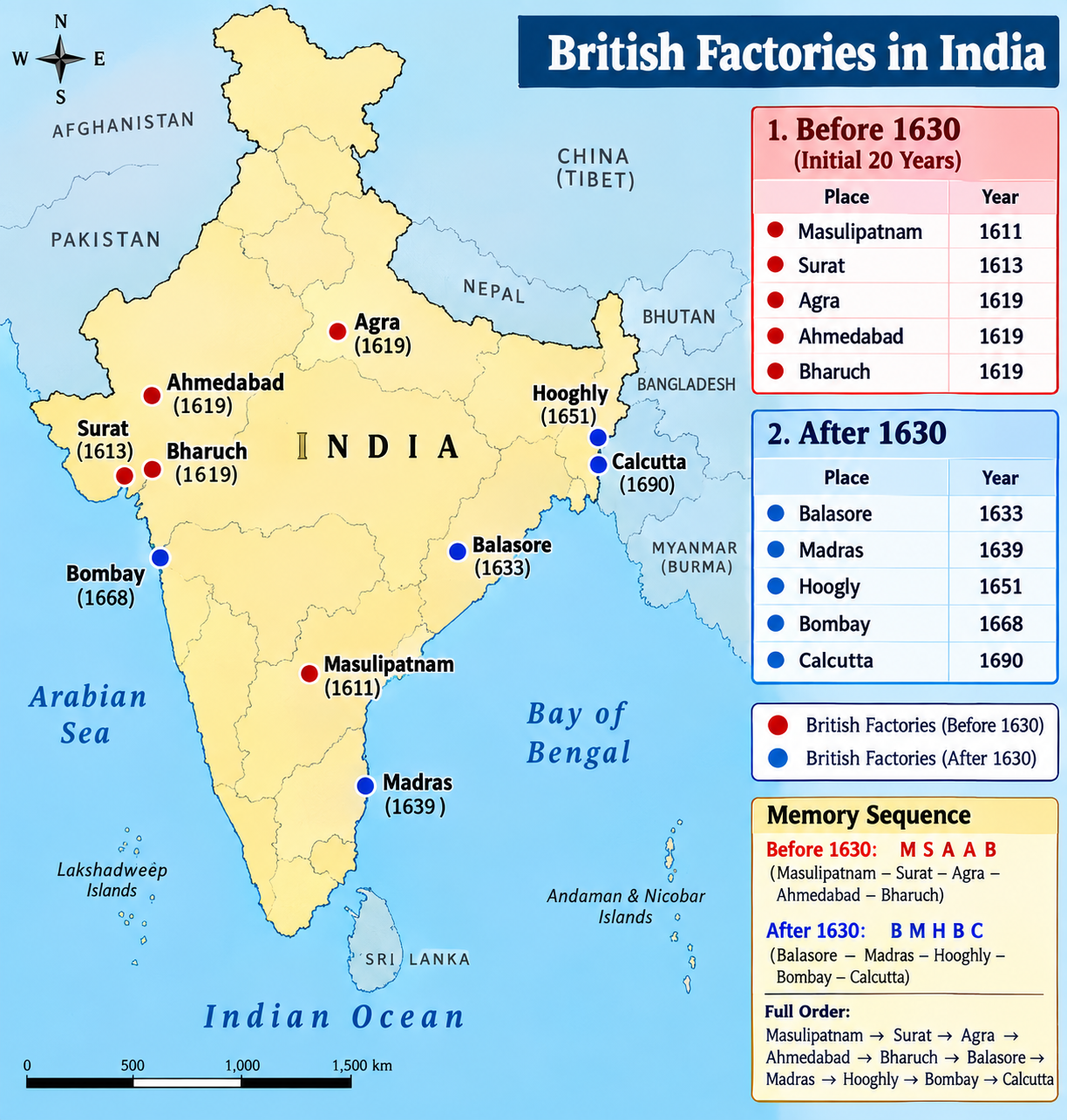
(1) Before 1630 (Initial 20 years)
(a) Masulipatnam (1611)
(b) Surat (1613)
(c) Agra (1619)
(d) Ahmedabad (1619)
(e) Bharuch (1619)
(2) After 1630
(a) Balasore (1633)
(b)Madras (1639)
(c) Hoogly (1651)
(d) Bombay (1668)
(e) Calcutta (1690)
Other British Factories
- Patna, Dhaka, Qasim Bazaar etc
BEIC in Patna
- The BEIC established a factory in Patna for silk and Calico (cotton textile)
- In 1651 a factory was set up in Gulzarbagh
- Major trade commodity was silk, cotton, salt peter (for making gun powder), indigo
British Forts
(1) Madras (1639)
- BEIC received Madras from the Rulers of Chandragiri
- BEIC received right to mint coins in return of 50% of revenue collected from the region
- The BEIC fortified the region, and it became first British Fort (Fort of St. George) in India
(2) Fort of Bombay
- British Prince Charles II received Bombay in Dowry from Portuguese in 1662 A.D.
- British prince provided Bombay to BEIC in 1665 - Trade Began
- Later it was fortified
(3) Calcutta Fort
= The BEIC started trade from Bengal in 1690
- They established their permanent trade center in 1696
- In 1698 they received zamindari of three villages :- Sutanati, Govindpur, and Kolkata. Together they became Calcuitta.
- They fortified the region in 1700
(5) French Company
- This was a public owned Company therefore control of Government
- This Company was established in 1664
- It was dependent on the government for every decision
French Major Factories in India :-
- Surat ----- 1668
- Masulipatnam ------ 1669
- Pondicherry ----- 1673
- Chandranagar ----- 1674 (Bengal)
- These were Cotton textiles company as there was high demand of cotton in Europe